What's a Trail Tree?
FAMILY LIFEHOME EDUCATION
Cameron Rohrer
9/2/20181 min read
Homestead, Nature, Education

Trail trees, Indian Trail Trees, or Trail Marker Trees are hardwood trees throughout North America that were intentionally shaped to be easily identifiable markers, recognizable for great distances and even in the snow. They were made by bending an oak, elm, or maple sapling and securing its top end to the ground with straps and stakes. The bend could be in the direction of desired travel. With the sapling staked down, the undamaged tree would continue to grow and new branches, not near the ground, would climb upwards. As soon as the bend in the trunk was mature enough to keep its shape, what was left of the top that had not bent upwards would be cut off.
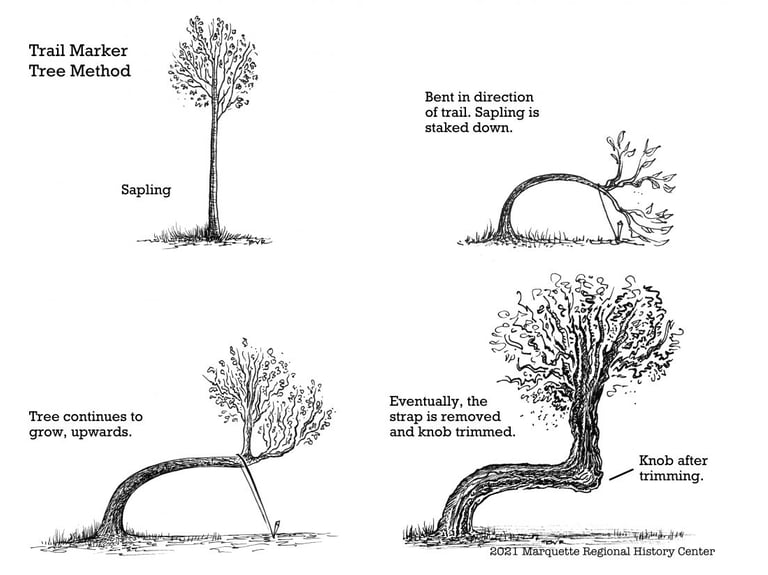

Some of these trees would have brought American Indians to fresh water springs, the preferred source of water used by the Indians and settlers alike. Other Trail Trees would have guided them to areas with exposed stone and copper deposits needed for their adornments, hunting implements, and everyday tools. Yet others could lead them to the areas where they could gather medicinal plants as well as plants used to make their dyes and paints. The Trail Trees may have taken them to ceremonial sites and occasionally the burial sites of their ancestors. Also, in relation to the rivers, these trees could indicate areas of portage and safe crossing.
Discovery of what appears to be a genuine Trail Tree on our property inspired the name of our homestead and home school.
The first record of trail marker trees appeared in a document called “Map of Ouilmette Reservation with its Indian Reminders dated 1828–1844”. This map shows actual drawings and locations of existing trail marker trees.